 |
The Mysterious Death of
|
|
The Mysterious Death of
|
|
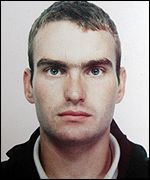
Sapper Collins died on Monday, August 27, early in the morning. The next day, the London Times published a piece by Michael Evans, "Boy gang incited to ambush NATO men." According to the Times, Collins was killed when a group of Macedonian teenagers perched on a bridge dropped a piece of cement through the window of the Land Rover he was driving, and the vehicle overturned. Two paragraphs into the piece, Evans writes, "After the Land Rover had skidded and overturned, they surrounded the Land Rover and 'further threatened' the fatally injured driver and the young captain from his regiment sitting next to him." The phrase, "further threatened," is in quotation marks, but Evans doesn't indicate who made the statement. We can assume, though, that the speaker is Sima Stojic, an 18-year-old Macedonian who appears to be the only (alleged) witness interviewed by Evans, perhaps because Stojic speaks some English. Evans describes Stojic in this non sequitur: "Speaking in broken English, learnt during two years in Detroit, the part-time mechanic witnessed the incident while riding home on his scooter." Evans then quotes Stojic, who appears to speak not broken English learned in Detroit but the sort of conversational English one might expect from, say, a British journalist. Stojic also appears to have great powers of observation and memory, especially considering that Stojic was riding along on his scooter when he witnessed the events described: "There were about ten of them on the bridge and another five at the side of the road.... "Five of them on the bridge were on one side looking out for a military vehicle, the other five were standing ready with a piece of concrete about 1ft long and 9in wide. I saw one of them lift this concrete slab high over his head and then throw it down when the vehicle went under the bridge. It went through the windscreen and another piece went through the window. "The vehicle skidded violently from side to side for about 15 metres and then turned over. It was a dreadful sound. Some of the boys then ran down to where the vehicle was and started to throw stones at it. But soldiers came from other vehicles and they ran off. I know the youths, I know their names. "...I know the name of the kid who threw the concrete that hit the vehicle. After it happened, they all ran off over the dual carriageway to the other side where the school is. None of them came from Magari." A US Army
vehicle came to rescue the overturned Land Rover. Army medics called
for a helicopter, which flew the injured soldier to Camp Able Sentry,
near Skopje. From there he was flown to Camp Bondsteel, a huge US
military base in Kosovo. It was then decided that Sapper Collins
needed surgery, so he was flown back to Skopje, this time to a Macedonian
hospital. Almost 5 hours after the Land Rover overturned, a neurosurgeon
began operating – and a few hours later, Sapper Collins died. (It should be noted that Stojic, the only, alleged, witness interviewed, does not claim that the "boy gang" had been "incited to ambush NATO men" – as the Times' title confidently claims.) On Wednesday, August 29, the day after the Times published Michael Evans' piece, Dnevnik, Macedonia's largest-circulation newspaper, replied. Supposedly based on interviews with numerous unnamed sources, Dnevnik questioned the NATO/Western media version of the story. According
to Dnevnik, the Macedonia/NATO agreement requires NATO to include
the Macedonian police in any investigation of a crime or accident
in Macedonia, yet NATO did not inform the police of the overturned
Land Rover or the alleged attack. An unnamed Macedonian police officer
claimed that NATO had cleaned the site and removed the vehicle before
the police arrived, that NATO gave contradictory descriptions of the
vehicle, and that NATO claimed that the vehicle had been transporting
sensitive documents. When the police asked to inspect the damaged
vehicle they were told that it had already been repaired. Unnamed
Macedonian medics claimed that they had examined Sapper Collins and
his injuries could not have been caused by a piece of concrete hitting
his head.
On the same day that Dnevnik published their article (Wednesday the 29th), Sima Stojic, the broken-English-speaking "witness" from the Times' piece, was interviewed on Macedonian television, and announced that he plans to sue the Times. Stojic claimed that the Times' journalists had offered to pay him for an exclusive eyewitness account of the incident, but he had told them that he hadn't seen anything – so they fabricated his interview. Later that day, the West struck back: Associated Press reporter, Danica Kirka, filed a story, "Macedonia Mob Threatens U.S. Medics," that introduced a new character: the valiant Puerto Rican US Army medic, Staff Sgt. Edna Flores, who, while pulling Sapper Collins from his vehicle, saw (according to Ms. Kirka) a mob of Macedonians "coming from the shadows ... making obscene gestures ... waving their hands, yelling in a language the medics couldn't understand." Sgt. Flores and her colleague, Sgt. Dencil Vargas (also of Puerto Rico), thought they were responding to a collision, so they were "surprised to find the vehicle intact. When they came around to the front of the vehicle, they found the windshield shattered and a British captain trying to assist his comrade." So, the Times' "witness," saw the Land Rover flip over, Dnevnik's Macedonian medics claimed Collins' injuries couldn't have been caused by a piece of cement but could have been caused by his vehicle flipping over, and now the AP's US Army medics claim that they found Collins' vehicle intact, except for a broken windshield. This discrepancy should be simple to correct – just check the Macedonian police photos of the vehicle. Unfortunately, as Ms. Kirka explains: "Some
reports
[in the Macedonian media] said
the incident was suspicious because NATO did not allow the vehicle
to be photographed and waited for hours before announcing the death."
Predictably, Ms. Kirka gives the last word to NATO, quoting US Major Barry Johnson, who has been "very frustrated by the misinformation and the way the facts have been presented by the Macedonian media, which has seemed to allude that NATO has been less than forthright'' about the death of Ian Collins. |
 Newspapers from
different nations will often report the same story quite differently,
as we can see from
Newspapers from
different nations will often report the same story quite differently,
as we can see from 