Reprinted from Bracing Views with the author’s permission.
The worse a war goes, the more those who wage it feel compelled to lie about it.
That pattern is visible today in America’s escalating conflict with Iran. This isn’t a war formally declared, clearly explained, or honestly debated. It’s a murky, shifting confrontation – unnecessary, immoral, and strategically incoherent. And as its logic weakens, the rhetoric surrounding it grows louder, simpler, and less tethered to reality.
Donald Trump once described himself as “a very stable genius.” He doth promote too much. Trump’s defining qualities are by now well established: he’s a narcissist, a bully, an empty vessel that makes plenty of noise, and a habitual liar. To borrow an expression from baseball Hall of Famer Dennis Eckersley, Trump lies just to stay in shape. Walter Kirn nailed it when he wrote, “Liars are exhausting people.”
Trump is an exhausting person. I take no pleasure in writing about him—few subjects have been more overexposed, and attention only feeds his narcissism. Yet he remains president and commander-in-chief of the U.S. military, which makes ignoring him impossible, especially in matters of war.
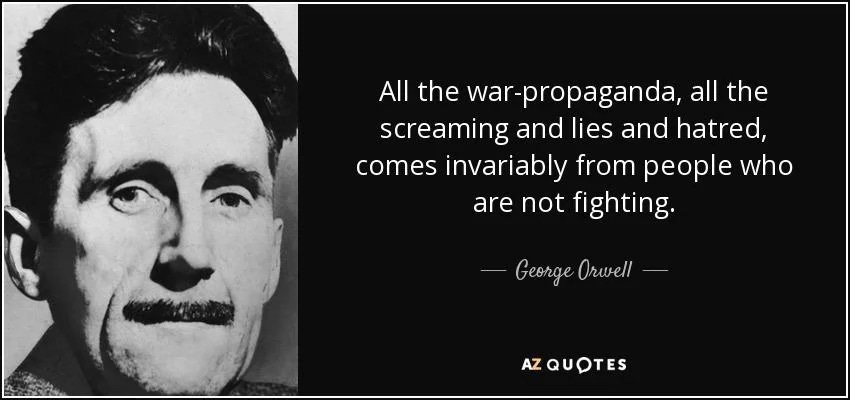
When wars go badly, truth is the first casualty. We’re given partial accounts, shifting rationales, and curated narratives. Information about attacks on U.S. positions, the full extent of casualties, even the strategic objectives of the conflict is fragmentary at best. What emerges isn’t clarity but confusion – a deliberate informational fog that obscures more than it reveals.
Out of that informational fog machine step Trump and his allies, who function less as truth-tellers than as amplifiers of noise and nonsense. An old Air Force saying comes to mind: they’re all Mach and no compass heading. They project speed, force, and confidence, but with no sense of direction or consistency. They’re wildly off-course, but hitting the afterburners regardless.
Trump’s relationship to truth has always been tenuous, but in wartime it becomes downright dangerous. His record of false or misleading claims makes his pronouncements on this conflict deeply unreliable. Even his own self-description is suspect: there’s little evidence of stability, and less of genius. What Trump does well is sell – whether branded steaks, vodka, sneakers, Bibles, or, currently, war with Iran. He doesn’t let facts interfere with the pitch, particularly when profit and ego are at stake.
Rather than a formula for military success, it’s one for disaster, both on the battlefield and at home. Wars justified by dishonest claims and sustained by misleading narratives neither end quickly nor well. They drift, expand, and corrode the institutions that wage them, including the democratic principles they’re often said to defend.
Trump and his allies present themselves as strongmen, but they’re better understood as would-be warlords lacking an allegiance to truth. Wars built on deception are dangerous enough. Wars waged by leaders who appear to believe their own distortions are more dangerous still. Such conflicts aren’t consistent with clarity, coherence, or honor – only with deeper confusion and mounting cost.