I made this comment last week, a day before Tucker Carlson’s interview with US Ambassador to Israel Mike Huckabee went viral for, among other things, Huckabee’s comments on Israel’s right of conquest in the Middle East to create a Greater Israel.
It’s no coincidence this potential war on Iran is coinciding with Israel’s actions to annex the West Bank.
Discussions about a US-Israeli war with Iran, without including the Palestine dimension, are incomplete and miss one of the prime objectives of such a war.
For Israel, the West Bank has always been the primary goal. Operations, campaigns and wars throughout the region need to be understood as supporting or shaping efforts by the Israelis for West Bank annexation. Even the genocide in Gaza can be understood that way. War with Iran, whether to achieve regime change or induce a civil war (a la Syria) is necessary to remove support from the Palestinians, as well as distract from the annexation itself and tie the Americans (indirectly) into the campaign. Regime change or incapacitating the Iranian government with domestic fracture and unrest serves to weaken support to other Palestinian allies like Hezbollah (already greatly weakened by Israel) and Ansar Allah by disconnecting those allies from one another.
The Israelis and Americans have destroyed, degraded and quieted much of the Axis of Resistance these last 2 1/2 years, Ansar Allah being the notable exception. To annex the West Bank, it needs to be isolated from any support, including political and moral support; Iran is the last major element of that.
There certainly are other reasons for a US war with Iran that are based in US narratives, interests, ideologies and desires but the role the US military will be playing in a war on Iran as acting as a supporting effort to isolate the West Bank, and distract attention from Israeli annexation, needs to be articulated clearly and loudly.
Ed Demarche of Trends Journal interviewed me last Thursday about the looming war with Iran and its connection to Israel’s annexation of the West Bank, the defeat of the Axis of Resistance, the shifting geopolitical landscape of the Middle East, and why Maduro’s kidnapping scares me so much:
(Transcript is auto-generated and edited for clarity, length and correction)
Ed DeMarche
I want to get right into what seems to be the key topic on everyone’s mind right now: Iran. I saw you post, just before we got on, about some of the reasons why this might be such a major topic — why war with Iran seems almost imminent. You wrote that it’s no coincidence that this potential war on Iran is coinciding with Israel’s annexation of, or actions to annex, the West Bank. You wrote: “For Israel, the West Bank has always been the primary goal. Operations, campaigns, and wars throughout the region need to be understood as supporting or shaping efforts by the Israelis for West Bank annexation. Even the genocide in Gaza can be understood that way. War with Iran, whether to achieve regime change or induce a civil war, is necessary to remove support from Palestinians, as well as to distract from the annexation itself and tie the Americans into the campaign.” It seems that a lot of Americans don’t really understand what’s happening in the West Bank. Can you go further into why you see ties between what the IDF and settlers are doing in the West Bank against the Palestinians and this greater Israel project that seems to be unfolding right now for everyone to see?
Matt Hoh
What you just quoted is certainly not the only explanation for this potentially coming war on Iran. There are many different contributing factors, and there’s no singular explanation for why the United States, Israel, and parties in Europe are eager for this war — it has certainly been a long-wanted one. But with this particular aspect of it, you cannot divorce a war on Iran, or any other operations, campaigns, and wars throughout the Middle East that we’ve seen over the last few years — or even the last few decades — from the Israelis’ drive to achieve greater Israel.
Greater Israel means the control — either de facto or de jure — of all the Palestinian lands, parts of southern Lebanon, parts of Syria, and the Sinai as well. Essentially what occurred in 1967, with the conquest of those territories by the Israelis. There has been a long-standing desire among certain Israelis to finish what was started in 1948. You’ll hear that argument not from fringe actors in Israel, but from sitting Israeli ministers — people like Finance Minister Bezalel Smotrich or National Security Minister Itamar Ben-Gvir — saying things along the lines of: we didn’t do the job right in ‘48, we stopped too soon. And of course, the 1967 war was driven in part by that same desire to complete the territorial conquest.
So when it comes to the idea that a war on Iran would serve as a supporting or shaping effort for Israeli annexation of the West Bank — the logic is this: in order for Israel to finalize annexation of the West Bank, it needs to isolate the West Bank from anyone who can support the Palestinians, whether materially, politically, morally, diplomatically, or economically. Israel wants to isolate the West Bank as much as possible. And if the West Bank is your primary objective, you want to clear out any obstacles before you begin, so you can concentrate fully on that goal.
Take Lebanon, for example. The Israelis don’t want to fully proceed with annexation of the West Bank until they feel the question of Lebanon has been resolved — that Hezbollah has been neutralized, that there is a buffer between Israel and Hezbollah, and that Israel controls enough of southern Lebanon to essentially dictate what occurs there. Managing the airspace and the ground there prevents Hezbollah from putting pressure on Israel from the north in ways that could disrupt the West Bank campaign. We have to understand that annexing the West Bank will require a harsher military presence than anything we saw during either the first or second intifada. So the Israelis want to clear the way — take care of any other actors, anything that could provide support to the Palestinians or create pressure from elsewhere.
You can make that argument for Lebanon, for Syria, for Iraq, for Yemen. Egypt, of course, was addressed decades ago. And now Iran is essentially the last one standing. What we’ve seen over the last two and a half years, Ed, is the United States and Israel successfully destroying, degrading, neutralizing, or quieting the axis of resistance, one by one. Look at Lebanon in late 2024 — the successful overthrow of Bashar Assad, a project that had been worked on for fifteen years — the quieting of the Iraqi Shia militias, the Popular Mobilization Forces, essentially muzzled and unable to carry out strikes in support of the Palestinians as they had been doing in late 2022 and 2023. Yemen is the notable exception — the Houthis, Ansar Allah, have not been defeated. The United States sent its Navy into the Red Sea twice to defeat them, and both times had to settle for a face-saving truce that was essentially a retreat.
And so Iran is this last pillar that needs to be addressed. I should say — and God help me for saying this — but you can argue that the genocide in Gaza has been a supporting or shaping effort for West Bank annexation as well. That you can’t move on to the West Bank until you’ve addressed the Gaza, Hamas, and Palestinian Islamic Jihad situation. Iran is the final pillar. There are other reasons for this potential war, but this is a major factor. By taking part in or conducting a war on Iran, the American military would essentially be conducting a supporting effort that allows the Israelis to fully begin their annexation of the West Bank — because that war will isolate the West Bank and also serve as a distraction. No one is going to be paying attention to what the Israelis are doing in the West Bank when the United States is killing scores of Iranians every day and missiles are flying back and forth.
Ed DeMarche
One thing that’s interesting to me: when Trump was running for president in 2024, he was endorsed by some of Israel’s top settlers, including Itamar Ben-Gvir, the head of national security for Israel. Yet the Trump administration has clearly stated that it is opposed to annexation of the West Bank. That’s the official policy position. If I were a spokesperson for the administration, I would say: we’re opposed to West Bank annexation, we want the Abraham Accords to proceed, we want Saudi Arabia to join — and they’ve said they won’t if there are issues with the West Bank. So how does the Trump administration square this?
Matt Hoh
That’s a really good point. Some of this may be that many of the Americans involved are unwitting — though I doubt that’s the case at the senior levels of leadership, particularly those who are themselves Zionists, which is a significant portion of the foreign policy establishment in Washington, whether Republican or Democrat. But for them, this may simply be a matter of semantics — the Israelis conditioning and massaging the framing to make it appear as something other than annexation.
The way they’re going about it now is through a land registration process — something the Israelis actually stopped back in 1967. This allows for the disingenuous argument that the Israelis are simply doing what’s legally required: conducting land registration. And what they’re finding, supposedly, is that the Palestinians don’t actually own the land — that it’s vacant or empty — and so Israel is taking it over as state property. They argue this falls under their purview according to the Oslo Accords, because most of the land being registered falls into what’s called Area C.
To clarify: the Oslo Accords established Areas A, B, and C. Area A covers the urban centers of the West Bank, fully controlled by the Palestinian Authority. Area B covers townships and villages outside those urban areas, where the Palestinian Authority has some control but the Israeli military is essentially in charge. And Area C — where there’s no Palestinian Authority presence at all — is where most of the settlements have been built. It makes up roughly 60 to 70 percent of the West Bank, mostly the rural areas. The argument will be made that this is unregistered, unowned land, and Israel is simply fulfilling its obligations under Oslo to manage it.
They’ll argue that Abbas is still in Ramallah, there’s still a Palestinian Authority, there’s still some type of figurehead — and Palestinian statehood will continue to be trotted out as an aspirational goal. This whole approach has really been the Israeli strategy for decades under Oslo: facts on the ground. Make it so that there is an ever-increasing Israeli presence through settlers. Since Oslo, the settler population has grown by roughly half a million — from about 200,000 to 250,000 settlers thirty-some years ago to about 700,000 to 750,000 today. That fact on the ground establishes Israeli control regardless of what the diplomatic paperwork or international law has to say about it.
So I think what you’ll get from this administration — or any administration that follows it, Republican or Democrat — is arguments over semantics. Just as the Biden administration never moved the American embassy back from Jerusalem after Trump relocated it in his first term [a Democratic president will accept Israeli annexation of the West Bank].
What you’re looking at for the West Bank is a gradual process: taking the rural areas, squeezing the towns and villages, forcing people into the urban areas, until you have seven or eight isolated Palestinian urban enclaves, cut off from one another, essentially under siege, left to die on the vine if you will. The idea being that conditions will be made so unbearable that people leave on their own — and, eventually, some type of emergency situation, like October 7th, will allow for a military-style ethnic cleansing like what we saw in Gaza.
The Israelis are not in a rush. They understand the opportunity. They understand that these last two and a half years have presented them with the best chance since 1967 to achieve their objectives, and they are carrying that out. When Trump visited Israel, the Knesset passed a bill calling for West Bank annexation, and the Trump administration was furious. A lot of Knesset members had abstained — they knew politically they couldn’t vote for it, but ideologically, that’s where their hearts were. And the anger from the more mainstream Israeli right toward those who pushed the bill was essentially: yes, we want annexation too, but you’re doing it wrong. You’re rushing it. You’re being loud and aggressive, and that will invite backlash from the Americans and the Europeans and set us back. Slow and steady, subtly, day by day — we will take it, and eventually it will all be ours.
So the Israelis see the opportunity. They’ve advanced throughout the region with one military campaign after another, largely successful. They’ve taken [more than] half of the Gaza Strip, forced the entire population into roughly 45 percent of pre-2023 Gaza, and completely immiserated that population. They see themselves as achieving their goals slowly but steadily. The urgency isn’t about rushing — it’s about making the most of a historic window while being smart about it.
Ed DeMarche
You mentioned that Iran is the main backer — or at least a supporter — of the Palestinian cause. From what we’ve seen unfold, the Houthis were arguably the biggest defenders of the Palestinians militarily. Hezbollah stepped up early in the genocide with strikes into Israel, saying there would be no peace while the genocide continued — but then Israel went hard at the civilian population in Beirut. My question is: could Iran have done more to protect the Palestinians and prevent a genocide? The only times Iran responded to Israel were after direct attacks on Iran itself — the strike on its diplomatic outpost in Syria, and then the twelve-day war. If I’m a Palestinian, do I really believe Iran has my best interests at heart?
Matt Hoh
That was certainly the image Iran had been projecting for decades — going back to its early revolutionary government in the early ‘80s, for example, its role in helping Hezbollah become the organization it became as a defender of southern Lebanon from [Israeli] occupation. And I think there’s a lot of disappointment over these last couple of years, both with Iran specifically and with the Axis of Resistance more broadly — the ability of the U.S. and Israel to take on the axis one by one and neutralize it piecemeal, rather than confronting it as a whole. The analogy of taking on individual fingers versus a fist.
I know there’s disappointment in the West Bank about this — I was there in November of 2024. But it’s a disappointment that’s reasoned, as you said. I don’t think Palestinians are saying Iran should have launched a war it would have lost on Palestine’s behalf. They understand the calculus. But the absence of that bulwark, that shield — the one they thought the Axis of Resistance might provide — is deeply felt. The Lebanese feel the same. Israel carried out its Dahiya doctrine, mass targeting of civilian infrastructure [and the population], while also conducting an effective military campaign against Hezbollah from the air. The expectation that the Iranians would join in and protect them didn’t materialize.
The Houthis — Ansar Allah in Yemen — are the great exception. They are the only ones who stood up [worldwide] for the Palestinians in a way that history will deem honorable. [Note: I don’t want to discount Hezbollah’s military actions against Israel from October 2023 to November 2024.]
Now, what is actually Iran’s capacity to fight a war against the United States and Israel? We’ve seen three engagements. The Iranians responded after their diplomatic post was struck in Syria. They responded after Ismail Haniyeh, the Hamas political leader, was assassinated in Tehran. And then there was the twelve-day war last June between Iran and Israel, with the Americans ultimately involved at the very end.
I fall in the camp that the American B-2 strike was a way to save face and bring that war to a close — because the Americans and the Israelis were running out of missile defense interceptors, running out of the ability to shoot down incoming Iranian missiles and drones. The war had to end. Trump sent in the B-2s as theater — a rationalization. He could say: it’s over, I obliterated the nuclear complexes, we don’t need to keep this going. And the Iranians were also ready to end it. They didn’t press further. Notably, when Iran retaliated for the B-2 strike, it was against the American air base in Qatar, and the Iranians gave the [Americans] a heads up, something the Israelis did not reciprocate when they later attacked Qatar.
But what is Iran’s actual capability? We were told Hezbollah had hundreds of thousands of missiles, rockets, and drones — and that didn’t materialize as expected. During the twelve-day war, Iran did have success hitting Israeli air bases and striking areas near IDF command and control bunkers buried underground. Whether those strikes had any real effect, we don’t know. And we simply don’t know how many missiles Iran has — estimates range from 100 to 3,000 produced per month, but no one really knows. [Note: 3,000 is likely a great exaggeration, including drones and shorter range systems, but it demonstrates the uncertainty we have as outside observers as to what capacity and capabilities the Iranians actually have.] The only thing I’m certain of about this coming war with Iran is that anyone who claims to know how it will end is wrong. There is too much uncertainty.
Your question about where Iran was during the genocide is a really important one. If the Axis of Resistance wasn’t going to intervene during a genocide, when were they ever going to act? Hezbollah did launch rocket and drone attacks into northern Israel — even sent a drone toward Netanyahu’s personal residence at one point. It had some effect: it forced Israel to keep soldiers in the north, forced 150,000 Israelis to evacuate their homes, and impacted the Israeli economy. But it had no effect on stopping the genocide. And once Israel fully turned its military campaign on Hezbollah, it was a quick and ugly affair. Same with the Iraqi Popular Mobilization Forces — as soon as the United States leaned on the Iraqi government and the Iraqi government tightened the reins, the militias went quiet.
Two and a half years out from October 7th, we can view some of this with historical perspective. It’s fair to evaluate what we thought we understood, what the expectations were, and what was actually delivered. And it’s understandable why Iran didn’t throw itself into a war against Israel and the United States — doing so would have given its adversaries exactly what they were looking for. Why give your opponent what they want when they want it? Also worth remembering: Iran was not prepared for October 7th. They had no role in it. They were as blindsided as the rest of us. It wasn’t as if they had been steadying themselves for what might come.
I think it’s a valuable exercise for those of us who commentate on this to ask: were we objective enough? Were our sources reliable? Were we letting our biases or wishes interfere with our analysis? That said, we may not have much time for reflection — we’re recording this at 3:45 in the afternoon [Thursday, February 19, 2026], which means it’s past midnight in the Gulf. As far as we know, the war may have already started.
Ed DeMarche
I have my own theory. I think if war starts, it might be after the Winter Olympics, which begin in four days. Remember — when Beijing hosted the Olympics, Russia had a deal not to go into Ukraine until after the games. Could we be looking at round two of that kind of arrangement?
Matt Hoh
Absolutely possible. As far as I know, the USS Gerald R. Ford hasn’t reached the Mediterranean yet, so I don’t think they’ll move until it’s in position to provide air cover over Israel. That’s where the Houthis become relevant again — they make it essentially impossible for the Ford to pass through the Suez Canal to join the Lincoln in the Arabian Sea. Meanwhile, U.S. naval forces in the region now have to contend with Iranian forces to their north or east, as well as Houthi forces to their west. The Americans won’t put the Ford through the Suez and run her through the Red Sea. So the Houthis’ role here is still quite significant. And their impact on any potential war with Iran is something that’s not being addressed nearly enough. At what point can the American Navy sustain a fight against both Yemen and Iran, particularly as a conflict drags on for months?
The political objectives seem to be either regime change in Iran or creating the conditions for Iran to descend into something like Syria was twelve or thirteen years ago. And what if those objectives aren’t achieved? You just keep bombing? Keep carrying out missile strikes, trying to stir the pot and force sectarian uprisings into civil war? We saw that the Americans couldn’t fight the Houthis alone for more than two months at a time without settling for a face-saving truce and retreating. The uncertainty here is enormous. And that, again, is the only thing I’m certain of: anyone who tells you how this ends doesn’t know what they’re talking about.
Ed DeMarche
It’s also confusing because the Trump administration itself doesn’t seem to know how it ends — because presumably, if Trump thought the Iranian leadership was truly on the ropes, they would have started bombing already. And I’m thinking about Venezuela. Some analysts were warning that Maduro wouldn’t fall easily, that Venezuela had a million-man militia, that it could turn into a disaster. And yet, it looks like that worked out fairly easily for the U.S. — at least for now.
Matt Hoh
The American four-star general who just took over Southern Command is in Venezuela right now. John Ratcliffe, the head of the CIA, visited Venezuela.
Ed Demarche
It’s remarkable how quickly that happened. So will they try the same thing with Iran — a quick strike, take out top leadership, and hope for a fast uprising?
Matt Hoh
Two things from the Maduro kidnapping worry me. First: how much confidence did that kidnapping give this administration?
Ed DeMarche
The hubris almost.
Matt Hoh
Right, who’s going to stop us? And second: if they were capable of planning and pulling that off, what else are they capable of?
You have to respect — as much as it pains me to say it — the successes that Israel and the United States have achieved throughout the region, systematically dismantling the Axis of Resistance one by one. They did it effectively. And now Iran stands largely alone. The Palestinians are isolated. Hezbollah has been neutralized. Syria was overthrown. The Iraqi militias have been quieted. [Yemen the notable exception.] So, what are they capable of with Iran, particularly given the ingenuity they showed with Maduro — not just the tactical side, putting Delta Force in and killing 100 people, but the political side: understanding Venezuela well enough to apply leverage, co-opt people, coerce or bribe whoever was needed. Stealing a president, having the CIA director fly in to receive the handshake, and then opening up the oil industry to American companies — while letting Venezuelan officials mouth off about resistance so they can save a little face.
Iran is completely different from Venezuela. I understand that. But you have to respect the capability. And measure it against the failures — the loss in the Red Sea, the campaign in Ukraine, the rough shape the American Navy and Air Force are in, the maintenance issues, the diminished capacity, the generals who directed that catastrophic Ukrainian offensive in 2023. There are real, serious weaknesses [that cast doubt on the US military conducted a successful campaign]. And that’s why I keep coming back to the question of sustainability: how long can this be carried out? Of course the United States can destroy a lot. We can kill a lot. We can bomb Iranian military targets and infrastructure. We could, if not assassinate their political leaders, drive them underground. We can combine that with the cyberattacks and sabotage operations we’ve been running there for years. And we can try to tie that into sectarian uprisings. That seems to be the plan. But how long can they sustain it? And looking back over the last two decades, which American military campaign has actually achieved its stated political objectives? Essentially none. The successes we have seen — you have to give most of the credit to the Israelis, and even Syria is a mixed bag where the Turks deserve significant credit. The uncertainty is too great. That alone is reason enough not to go to war.
Ed DeMarche
Matt, my last question: back to Iran. If Saudi Arabia is watching this war unfold — let’s assume the U.S. does go to war with Iran — would Saudi Arabia be concerned that if Israel has its way and Iran is taken down, Israel becomes nearly insurmountable in the region? We always talk about how the Saudis and Iranians are at odds, but do you think there’s worry among the Gulf states — even those allied with Israel — that a defeated Iran would leave Israel with no regional counterbalance? Is that something they’d want for stability, or fear?
Matt Hoh
I think the Saudis have moved past the idea that Iran is their primary rival. It will always exist to some degree, but you’ve certainly seen a detente develop over the last couple of years. The Saudis have clearly signaled in recent weeks that they want no part of this war — they won’t participate and don’t want the Americans using their bases. Whether that position holds is another question. But what you’re getting at, Ed — why wouldn’t the Saudis, the Emiratis, or the Qataris be next? I think they feel they have a modus vivendi with Israel, built on their relationship with the United States, that exempts them from the fate Iran has been cast into. But there are a few things to argue against that.
Every empire, every hegemon, needs a rival — for the sake of its own narrative. For Israel and the Americans, Iran has filled that role quite effectively for decades. If Iran is gone, who becomes the villain in the story? You saw the identity crisis the U.S. went through after the Cold War — that anxiety of: who are we against now? Because the narrative of a struggle, of good versus evil, requires someone standing in the evil role. So there’s always that danger. And the idea that the Gulf monarchies will continue to occupy a special, protected place — that’s a tenuous assumption.
These states do have a particular relationship with Donald Trump that they haven’t had with previous American presidents — you can point to things like the Qatari-American Security Alliance that Trump established by executive order. But how long does that last? And I think that’s why you’re seeing moves like Saudi Arabia consolidating its position in Yemen, essentially evicting the Emiratis and taking control of the south. The Emiratis are operating throughout the region differently — their relationship with the RSF in Sudan, with Somaliland — building anchors and footholds that provide some strategic depth.
One thing these last couple of years have made clear to these states is their fundamental inability to intervene. Erdogan’s rhetoric about Gaza and Lebanon was never going to materialize into F-16s over Rafah or Beirut and Israeli planes being shot down. The impotence these states have felt is real. And I think the realization that you cannot trust the United States is sinking in. What you’re going to see, I believe, is a geopolitical shift in the region — the development of new relationships, if not formal alliances, built to provide real protection. Discussion of a Saudi-Pakistani-Turkish relationship is being discussed more and more, sometimes the Egyptians are included as well.
And I’ll close with this: I think the idea of a nuclear-armed Turkey or a nuclear-armed Saudi Arabia is a very real possibility. Why shouldn’t it be? Why should MBS or Erdogan look at the regional landscape, understand their limitations, and accept that they will always be dominated by Israel? After these last two and a half years — after watching what happened to Gaza, to Lebanon, to Syria, to Iran — wouldn’t you consider it? I think that’s a very real proliferation risk in the Middle East. And it’s entirely understandable.
Ed DeMarche
Every country — if I were running one — would want nuclear weapons. Look at Kim Jong Un. He’s still there. Putin is still fine. Nuclear weapons seem to guarantee your survival. Matt Hoh, Senior Fellow at the Eisenhower Media Network, thank you so much for joining The Trends Journal.
Matt Hoh
Thank you, Ed.
One thing I didn’t speak to was the broader idea of Greater Israel, the belief that Israel should extend from the Nile to the Euphrates, something supported by Prime Minister Benjamin Netanyahu.
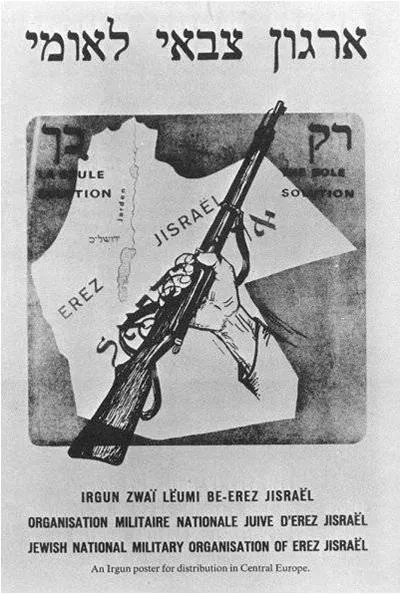
Antiwar.com: A 1931 propaganda poster of the Irgun, a Zionist terrorist group, showing a map labelled “Land of Israel” covering the borders of both Mandatory Palestine and the Emirate of Transjordan, which the Irgun claimed in their entirety for a future Jewish state.
If you haven’t seen Carlson’s interview with Huckabee, it is jaw-dropping; maybe even more than his interview with Senator Ted Cruz. If you don’t have 2 1/2 hours for the full interview, read Mehdi Hasan’s article on the 11 biggest lies Huckabee told Carlson.
I am on weekly with Judge Napolitano on Judging Freedom at 2 pm US Eastern time on Tuesday and with Nima Alkorshid on Dialogue Works at 4 pm US Eastern on Wednesday. Here are last week’s interviews. In conversation with Nima, I discuss the larger idea of Greater Israel, that belief that Israel should extend from the Nile to the Euphrates, something, as mentioned above, that Benjamin Netanyahu says he believes.
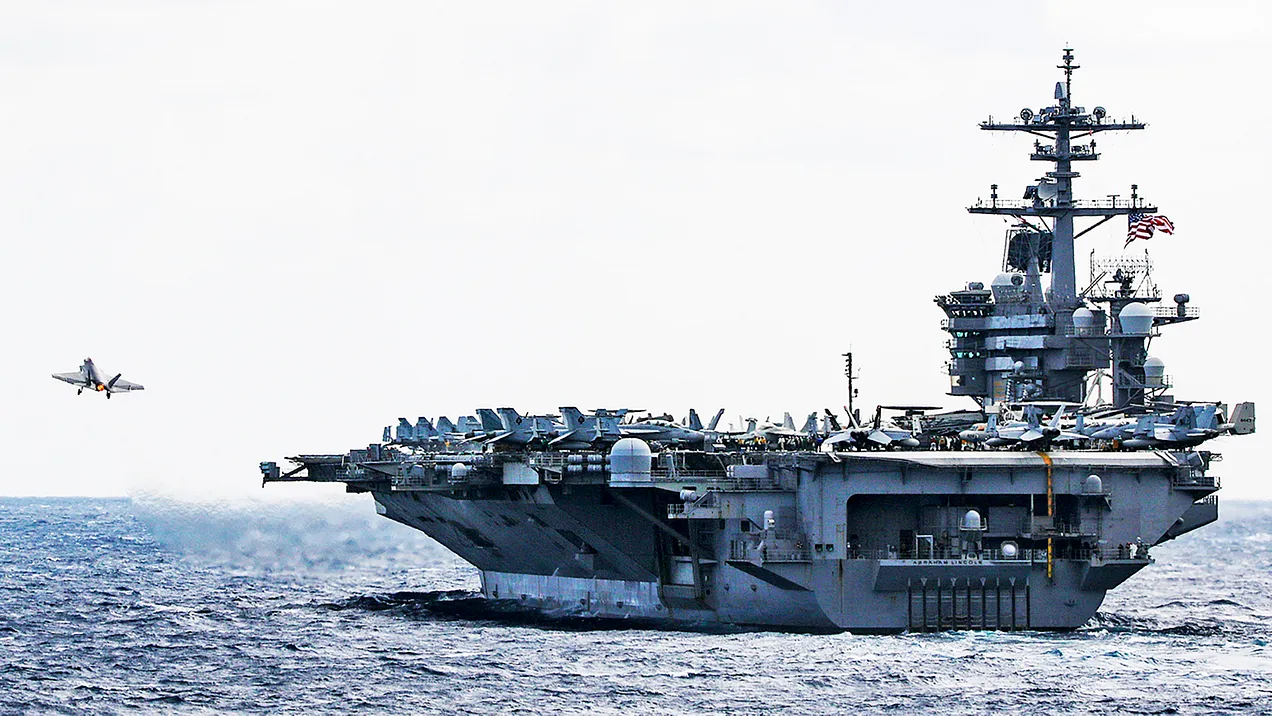
Credit for the photo of the USS Abraham Lincoln used for social media postings is Petty Officer 1st Class Jeremy Faller, US Navy.
Thank you for reading, watching and supporting. It means a very great deal to me.
Reprinted with permission from Matt’s Thoughts on War and Peace.
Matthew Hoh is the Associate Director of the Eisenhower Media Network. Matt is a former Marine Corps captain, Afghanistan State Department officer, a disabled Iraq War veteran and is a Senior Fellow Emeritus with the Center for International Policy. He writes at Substack.