



The signals coming from the Obama administration as a “strategic review” of Afghan policy is nearing completion this week are, to say the least, confusing. While much new thinking on the Afghan War has been promised, early leaks about the review’s proposals for the next “three to five years” largely seem to promise more of the same: a heightened CIA-run drone war in the Pakistani borderlands, more U.S. military and economic aid for Pakistan (and more strong-arming of the Pakistanis to support U.S. policy in the region), more training of and an expansion of the Afghan army, and of course more U.S. forces – the president has already ordered 17,000 extra troops into the war.
The new policy elements, evidently involving modest invitations to (and threats toward) Iran, a belief that up to 70 percent of Taliban fighters might be won over via the right combination of money and “reconciliation,” and a “scaling back” of hopes for Afghan democracy, hardly seem to add up to a brilliant thought exercise in the face of a disaster of a war now into its eighth year. In the meantime, of course, Americans, Afghans, and Pakistanis continue to die.
Ironically, the real X-factor in how the Afghan War will be pursued in the years to come probably lies nowhere near Afghanistan. Just how severely, and for how long and in what complex ways, the global economic collapse will affect the United States and Washington’s revenues may be the true determinative factor in whether the Obama administration slowly makes its way further into, or out of, the war. Will this president, with so many giant programs and problems on his plate, really be capable of fighting an Afghan war at more intense levels and in more expensive ways for long? Certainly, the Europeans and the Canadians, who think they’ve seen which way the wind is blowing, doubt it. According to an unidentified “senior French official” speaking to Agence France Press, “We are lowering our ambitions. … The Americans are now looking for a way out, they no longer regard Afghanistan as strategic. It’ll take two to five years, but we’re in a logic of disengagement.”
Whatever the truth of the matter – and the Obama administration may be the last to know what that is right now – here’s the saddest thing: When it’s all over and we finally do leave, as Pratap Chatterjee, the author of a new must-read book, Halliburton’s Army: How a Well-Connected Texas Oil Company Revolutionized the Way America Makes War, discovered on a visit in November, the Afghans of Bamiyan province will be at least as poor as they ever were in what will remain a devastated country. It’s rare for us to get a view of the areas of Afghanistan where Americans are not fighting. So think of today’s report as a glimpse of the unknown Afghanistan that escapes American notice – and aid. (And click here to view three videos put together by cameraman Ronald Nobu Sakamoto with Afghan scenes from 2002 and 2008 that vividly capture some of the experiences Chatterjee describes.) Tom
One Country, Three Futures
The Afghanistan Americans seldom notice
by Pratap Chatterjee
Want a billion dollars in development aid? If you happen to live in Afghanistan, the two quickest ways to attract attention and so aid from the U.S. authorities are Taliban attacks or a flourishing opium trade. For those with neither, the future could be bleak.
In November 2008, during the U.S. presidential elections, I traveled around Afghanistan asking people what they wanted from the United States. From Mazar in the north to Bamiyan in central Afghanistan to the capital city of Kabul, I came away with three very different pictures of the country.
Dragon Valley is a hauntingly beautiful place nestled high up in the heart of the Hindu Kush mountains. To get there from Kabul involves a bumpy, nine-hour drive on unpaved roads through Taliban country. In the last couple of years, a small community of ethnic Hazara people has resettled in this arid valley, as well as on other sparse adjoining lands, all near the legendary remains of a fire-breathing dragon reputedly slain by Hazrat Ali, the son-in-law of Prophet Mohammed.
A few miles away, hewn from the soaring sandstone cliffs of Bamiyan in central Afghanistan are the still spectacular ruins of what used to be the largest examples of standing Buddha carvings in the world. Two hollow but vast arched, man-made alcoves, which rise higher than most cathedrals, still dominate the view for miles around.
For much of the world, the iconic image of Taliban rule in Afghanistan remains the shaky video footage from March 2001 of the dynamiting of those giant Buddhas that had rested in these alcoves for almost 1,500 years. Months after they were blown up, the Taliban bombed neighboring Hazara towns and villages from the air, burning many to the ground. Tens of thousands of their inhabitants were forced to flee the country, most seeking shelter in Iran.
In the seven years since the Taliban were ousted by the United States, the Hazara villagers of Bamiyan have started to trickle back into places like Dragon Valley in hopes of resuming their former lives. Today, ironically enough, they find themselves in one of the safest, as well as most spectacularly beautiful regions, in the country. Its stark mountains and valleys, turquoise lakes and tranquil vistas might remind Americans of the Grand Canyon region.
Yet the million-dollar views and centuries of history are cold comfort to villagers who have no electricity, running water, or public sanitation systems – and little in the way of jobs in this hardscrabble area. While some of them live in simple mud homes in places like Dragon Valley, others have, for lack of other housing, moved into the ancient caves below the ruined Buddhas.
No Help Whatsoever
Just outside one of the many single-room mud houses that line the floor of Dragon Valley, I met Abdul Karim, an unskilled laborer who has been looking daily for work in the fields or on construction sites since he returned from Iran a year ago. Most days, he comes home empty-handed. “We have nothing, no work, no electricity, no help from the government or aid organizations. Right now our situation is terrible, so of course I have no hope for the future. I’m not happy with my life here. I’m ready to die because we have nothing.”
His only source of income is a modest carpet-weaving business he’s set up inside his tiny house at which his two children, a boy aged about 10 and a girl of about 15, work. It generates about a dollar a day.
As I went door to door in the small Hazara settlement, I heard the same story over and over. In the mud house next to Karim’s, I met “Najiba” (not her real name), a woman of perhaps 70 years, who said that her family had received virtually nothing in aid. “The government hasn’t done anything for us. They just say they will. They just came by once, gave us some water, some clothes, but that’s it.”
Traveling in Bamiyan province, I repeatedly heard the same story with slight variations. In the wheat fields outside the village of Samarra, I met Shawali, a peasant who told us that he and his son had fled south to Ghazni, a neighboring province, to escape the Taliban. “My son and I labored hard pulling big carts full of timber and heavy loads until we could raise enough money to return to Bamiyan.” Here he remains a day laborer, eking out a living, and no better off than when he was in internal exile in Ghazni. 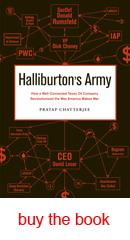
The situation has so disintegrated that many say they wish they could simply return to the refugee camps in Iran. In Dragon Valley, for example, I met “Khadija.” As the middle-aged woman fanned a small fire fed by wood gathered from nearby, she said, “We were happy in Iran. It was good. The weather was warm. We had a good life there, but it was still someone else’s country. When the [Iranian] government told us we had to go back home, we wanted to return to start a new life. But [the Afghan government] hasn’t helped us at all. They told us they were going to give us wood, supplies, and doors, but they’ve given us nothing… no help whatsoever.”
A recent report from the U.S. Agency for International Development (USAID) offers some context for the kind of desperate poverty I encountered in Bamiyan. The agency’s analysts estimate that about 42 percent of the country’s estimated 27 million people now live on less than $1 a day.
Mazar-i-Sharif
Unlike Bamiyan, which has almost no paved roads and no electricity, the northern city of Mazar-i-Sharif stands out as a relative success story. Mazar was the first place the U.S. and its Afghan allies from the Northern Alliance captured in the 2001 invasion. Some 40 miles from the border of Uzbekistan, it is home to the Blue Mosque, the holiest shrine for Muslims in all of Afghanistan, where Hazrat Ali is said to be buried.
When I first traveled to Mazar in January 2002, only the mosque was lit at night, a comforting beacon of hope in the post-invasion darkness of a shattered city. The sole other source of luminosity: the headlights of the roaming Northern Alliance gunmen who policed the city in Toyota pickups packed with men armed with Kalashnikovs and rocket launchers.
During the day, however, the city was brimming with hope and activity, just weeks after the Taliban fled. I met folk musicians like Agha Malang Kohistani performing songs on the street to mock the Taliban and classical musicians like Rahim Takhari playing in public for the first time in years, while weddings were graced with singers like Hassebullah Takdeer who sang classics like "Beya Ka Borem Ba Mazar" (“Let’s Go to Mazar”).
The Fatima Balkhi Girls School was among those that were opening their doors to students for the first time in years. Amid the rubble of bombed-out buildings at the Sultan Razya School, for instance, little girls flocked to classrooms with earthen floors and no chairs. They squeezed by the hundreds into tiny rooms, where lessons were sometimes chalked onto the backs of doors.
At Sultan Razya, I spoke to 14-year-old Alina, who bubbled with teenage excitement as she described her adventures studying secretly in teachers’ houses during the Taliban era. “One day we went to class at eight o’clock, another day at ten o’clock, and another day four o’clock,” she recalled.
Seven years later, I returned to find Mazar now well supplied with electricity (by the Uzbek government) and connected to the capital city of Kabul by a smooth, new, well-paved two-lane highway. Although there had been a couple of suicide bombings in the city, Mazar was almost as safe as Bamiyan. Residents who fled during Taliban rule to places like Tashkent had returned with hard currency to invest in local businesses. While it would be an overstatement to say that Mazar was flourishing, it’s certainly decades ahead of Bamiyan in development terms.
I tracked down Alina – one of very few in her class to have continued her education – at Balkh University, where she was studying Islamic law. Now a little shy about talking to foreign journalists, she was still happy. “Things have completely changed in every part. All of the women and girl students are studying their lessons in computers and English, and they are happy,” she told us.
I also revisited the Fatima Balkhi School, where the principal took us to meet a new generation of 14-year-olds who told us about their plans for the future. One wanted to be a banker, another dreamed of being a doctor, a third spoke of becoming an engineer. Earthen floors and makeshift chalk boards were a thing of the past. The Sultan Razya School had been completely rebuilt and the girls wore neat school uniforms, although teachers still complained of a lack of proper supplies.
Opportunities for girls were also expanding. Maramar, a 14-year-old Balkhi student, invited us to visit the local TV station where she hosted her own show. Astonished, I took her up on her offer and went to the RZU studios on the outskirts of town where I filmed her reading headlines – about the U.S. elections! – on the afternoon news.
Indeed girls’ education is one of the real success stories in Afghanistan, where one-third of the 6 million students in elementary and high schools are now female, probably the highest percentage in Afghan history. The education system, however, starts to skew ever more away from girls the higher you get. By the time high school ends, just a quarter of the students are girls. Only one in 20 Afghan girls makes it to high school in the first place, and even fewer make it through.
The Return of the Taliban
Neither rural Bamiyan in central Afghanistan nor urban Mazar in the north has had to worry greatly about the rise of Islamic fundamentalism in the last few years. For one thing, as Hazaras, an ethnic minority descended from the army of Genghis Khan, most residents of Bamiyan are from Islam’s Shia sect, while the Taliban, largely from southern Afghanistan, are Pashtun and Sunni. Indeed, when they ruled most of the country, the Taliban went so far as to brand the Hazara as non-Muslim.
Similarly, Mazar, which has a large Tajik and Uzbek population as well as some Hazara, but relatively few Pashtuns, has also been spared the influence of the Taliban. Unlike rugged and remote Bamiyan, it is situated in a well-connected part of the country, close to Russia and the Central Asian republics. (The former Soviet Union used the city as a strategic military base in the early 1980s.)
Yet when one heads south to Kabul and toward the Pakistani border, a third Afghanistan is revealed. Twenty minutes from the center of Kabul, the Taliban control large swathes of the provinces of Logar and Wardak.
In the Pashtun-dominated southern city of Kandahar, the stories of attacks on girls’ schools are already legend. In November 2008, while I was visiting Bamiyan and Mazar, three men on a motorcycle attacked a group of girls at the Mirwais School, built with funds from the Japanese government. Each carried containers of acid which they used to horrific effect, scarring 11 girls and four teachers. The Taliban have denied involvement, but most local residents assume the attackers were inspired by Taliban posters in local mosques that simply say: “Don’t Let Your Daughters Go to School.”
Last March, Taliban followers raided the Miyan Abdul Hakim School in Kandahar, which serves both boys and girls, making bonfires out of desks to burn the students’ books. At another local school, a caretaker had his ears and nose cut off, and this was but one of dozens of attacks on such schools.
“Yes, there have been improvements in girls’ education in Afghanistan. You can see it on the streets when the girls walk home from school in their uniforms, laughing with books in their hands. You can see it in the schools that have been built all over the country, in villages where they have never had schools before,” Fariba Nawa, author of Afghanistan, Inc., told us.
“However, in the south there’s a different story to be told,” she added. “That’s the story of girls being afraid to go to school, even the story of newly built schools being burned down, or teachers being beheaded for teaching in them. So it depends on what part of Afghanistan you go to, which story you want to tell.”
Seeking Answers in Kabul
Green laser beams darted from the fast-moving military convoy scanning the pedestrians and parked cars along the road from Kabul airport. As I bent over our taxi’s stalled engine, the sharp, pencil-thin beams raked across us menacingly, causing me to stumble back in surprise.
Unlike in Bamiyan or Mazar, Kabul teems with vehicles: military convoys from a dozen nations, Ford Ranger pickups (supplied by DynCorp, a U.S. contractor), Toyota Land Cruisers used by United Nations personnel, and thousands of used Toyota Corollas driven by Afghans.
Our first stop was at the home of Mir Ahmed Joyenda, a member of the Afghan parliament. I wondered, I told him, why, all these years after the fall of the Taliban, entire provinces like Bamiyan had no electricity or potable water supply to speak of. As (bad) luck would have it, Joyenda could discuss the problem on a personal basis – and by the light of a kerosene lamp.
“You see,” he responded, “we are in the city of Kabul. As a member of the parliament of Afghanistan, I’m sitting in front of you, but I don’t have any electricity in my house. What do you think of the rural areas? What about the poor areas of the Kabul city and other parts of the country?” He suggested I ask the ministry of electricity why he had none.
So I arranged to meet Wali Shairzay, the deputy minister for electricity and water. After enduring an hour-long lecture on all the new projects supposedly in the pipeline, I asked him why there was Uzbek-supplied electricity in Mazar, but no Afghan-supplied sources in most of rural Afghanistan. I noted that many countries had emerged from decades of war to successfully provide basic services to their citizens.
Who knows why a man in his position wouldn’t have expected such a question, but he looked like a deer caught in the headlights. “Most people call Afghanistan a post-conflict nation,” he began hesitantly. “My terminology is a bit different, I call it post-devastation.”
As a result, he suggested, battle-weary Afghans weren’t able to articulate what they needed. “Like a patient speaking of the problems, where it is hurting, when it started, how bad is the pain, et cetera. Unfortunately, this patient here – Afghanistan – could not speak and you have to find out what the problem is, what is the prior diagnosis and medication.”
Shairzay claimed that, over the previous seven years, his ministry had focused on the big electricity projects like the importation of power from Uzbekistan, and then he, in essence, passed the buck. When it came to provinces like Bamiyan, he said, his ministry wasn’t really in charge at all. That fell under the jurisdiction of the Ministry of Rural Rehabilitation and Development, where he was going that very afternoon to discuss matters with his counterparts.
Yet, the deputy minister’s words ran counter to what I had heard from the dozens of villagers around Bamiyan who knew exactly what they wanted: electricity, water, health care, a steady food supply, and jobs.
I even found very articulate and well-educated Afghans in Bamiyan who were more than happy to describe simple but effective projects that might have gone a long way toward serving the population’s desperate needs. For example, Dr. Gulam Mohammad Nadir, the chief medical officer of Bamiyan’s only hospital, told us that the needs of small rural communities were already well known. For example, he assured me, he could dramatically reduce health problems and save lives with a small grant that would allow him to demonstrate basic sanitation principles in local villages.
“I believe having clean water is the most essential aspect to human health and to prevent diseases. At the very least, we need to educate the people about how important it is to have proper sanitation, a clean water supply, and [knowledge about] how they can protect themselves from waterborne diseases.”
Why, in fact, were such simple projects never implemented? The answer proved to be surprising, and it helps, in part, to explain the dismal fate of the Bush administration’s version of Afghan “reconstruction.” Virtually none of the $5.4 billion in taxpayer money that USAID has disbursed in this country since late 2001 has been invested in Bamiyan province, where the total aid budget, 2002-2006, was just over $13 million.
While the Japanese government and UNESCO have dedicated some money to Bamiyan province, most of it has been spent on restoring the giant Buddhas, not on basic services for residents.
The bulk of the foreign aid has gone to big cities like Kabul and Mazar, but much has also gone into the coffers of foreign contractors and consultants like the Louis Berger Group, Bearing Point, and DynCorp International in Afghanistan. The rest of the aid money has been poured into “rural development” projects in southern provinces like Kandahar where Canadian and U.S. troops are fighting the Taliban, and into provinces like Helmand where British soldiers, alongside U.S. troops, are struggling against the opium trade.
Most American taxpayer money is actually spent on the troops, not, of course, on poor Afghans. In fact, with Pentagon expenditures in Afghanistan running at about $36 billion a year, the annual aid allocation for the 387,000 people who live in Bamiyan province is outstripped every single hour by the money spent on 30,000-plus American troops and their weaponry.
It turns out the villagers of Dragon Valley have two problems that can’t be overcome. They have neither the Taliban to fight, nor opium crops to eradicate.
Pratap Chatterjee is the author of Halliburton’s Army: How a Well-Connected Texas Oil Company Revolutionized the Way America Makes War. He is the managing editor of CorpWatch. He traveled to Afghanistan with cameraman Ronald Nobu Sakamoto. To view three of Sakamoto’s videos with Afghan scenes from 2002 and 2008 that vividly capture some of the experiences Chatterjee describes, click here.
Copyright 2009 Pratap Chatterjee
