On my June 18 radio show [stream] [download], I interviewed Loretta Napoleoni, an economist, reporter, and novelist from Italy, about the economics of terrorism, a subject she knows well. Her work for Italy’s financial papers goes back to the ’70s and includes coverage of jihadists, the IRA, and even interviews with leaders of the Italian Red Brigades. Her new book Terror Incorporated: Tracing the Dollars Behind the Terror Networks is the result of 10 years of investigation. It shows.
| ||||||||||

While not ignoring religious, political, and ideological motivations, the book focuses on the economics of modern terrorist groups. It tells how these groups emerged, often spurred by various foreign incursions by the U.S. and U.S.S.R. during the Cold War, and how they spun off from their former state masters, excelled at raising money through criminal activity, and became amorphous, stateless bands of killers. She calls it the “privatization of terrorism.” It’s not the phony “privatization” by government contract that we’re used to. Modern jihadist groups are independent of the Middle Eastern states, and in many cases are even their greatest enemies.
The black market is the jihadist’s path to power. Though not an apparent libertarian, Napoleoni details how government intervention in the free exchange of goods has time and again helped jihadists flourish throughout the world. For a terrorist group, she says, “heroin equals independence.” This began in the 1980s when America supported the mujahedin in Afghanistan through Pakistan’s Inter Services Intelligence (ISI). On the CIA’s recommendation, Pakistan convinced the mujahedin to levy high taxes on the land used by Afghan poppy farmers in order to finance the resistance, which forced farmers to intensify opium production enough to afford these tax increases. A smack-and-guns-dependent economy soon replaced the formerly agrarian one, leaving what Napoleoni describes as a “state shell.” The “golden crescent” now supplies three-quarters of the world’s heroin.
 After the Soviet Union collapsed, the ISI, with U.S. approval, sent jihadists all around central Asia to foment unrest in the former Soviet ‘Stans and to facilitate their break from Moscow. Heroin sales to European and American citizens paid the way.
The heroin market generates enough money to finance terrorist activities only because it is illegal. As the risk involved grows unnaturally as a result of government intervention, so too does the potential for profit.
The same goes for oil. Where there are embargoes against trade, such as the sanctions maintained against Iraq for 13 years, criminals gain, among them, in this case, the secretary-general of the United Nations, Koch Oil, and underground terrorist networks.
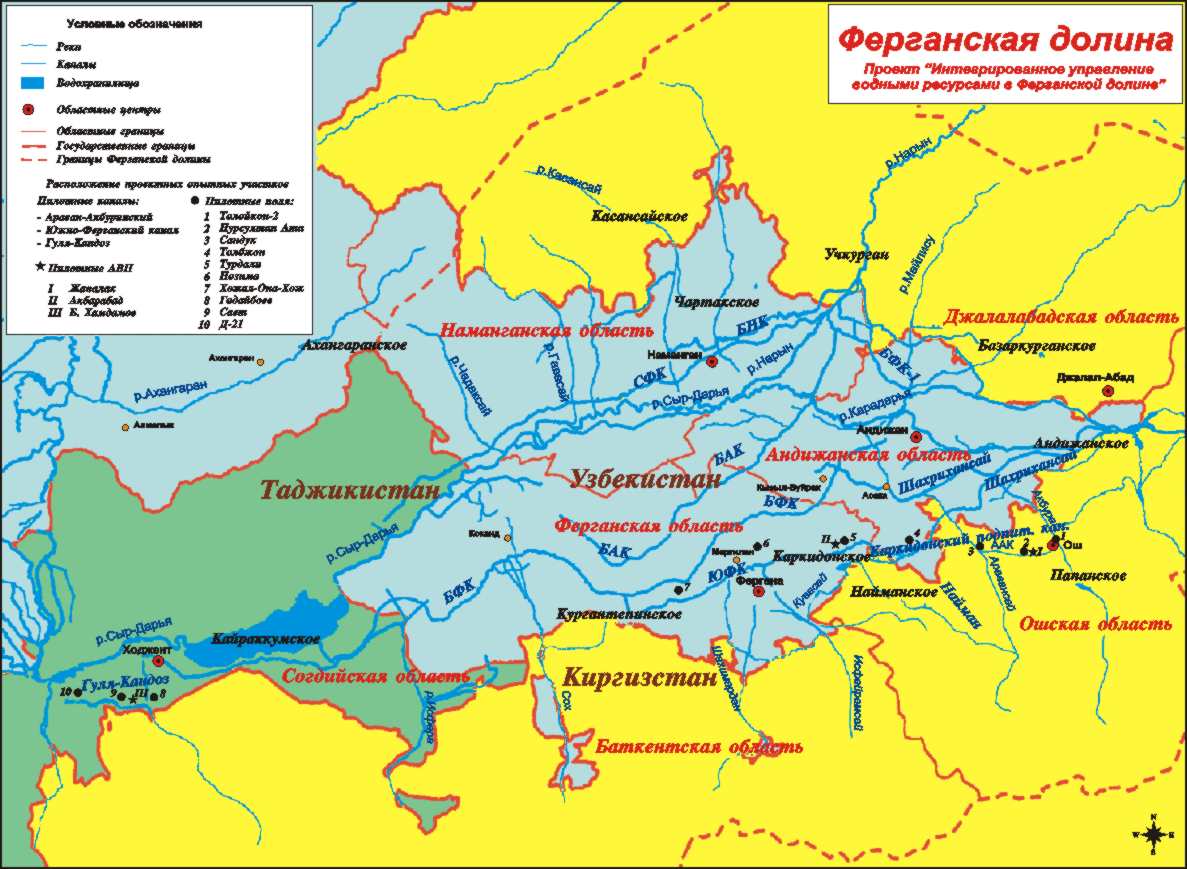
When the Soviet ‘Stans gained independence, the former Communist autocrats hardened their borders, which to this day restrict locals from trading freely with their neighbors. Formerly prosperous economies like that of the Fergana Valley were destroyed, creating new havens for organized terrorist recruitment. These crippled economies now depend mostly on Islamic banks that grew up to fill this space where Western investors see too much risk.
This capital is used to buy influence in a mirror image of how the U.S. operates, but forcing religious doctrines instead of mercantilist ones. Napoleoni quotes a Middle Eastern banker as telling her that, “they used finance to colonize poor nations where Muslims lived. The material support granted to the Muslim population in need was a means of imposing fundamentalist principles upon Islamic society.”
Much of this money is spent on recruiting potential terrorists from a supply-heavy market of poor, desperate, and angry youth with little to lose. This same process played out through the 1990s from Albania to Indonesia, and is playing out in Iraq before our eyes.
So Bush is right when he speaks of hopelessness causing terrorism. He, of course, lost any points gained by that insight when he took the advice of the “End of History” crowd and decided to invade and attempt to “remake” the Middle East in that vein.
Imagine it. The U.S. military, the biggest socialist program on earth, using violence to open up “free markets” and teach property rights: The irony may be lost on some Americans, but how must it look from the Middle East and Asia?
A tragic irony of exporting “liberty” with force is the expansion of the acceptance of its opposite doctrines. The same thing is happening to the Middle East as happened in Seattle in 1999. As the globalization of capital spreads under the corrupt American system of corporate-state socialism, provoking enemies along the way, many of those in opposition focus their blame on capitalism rather than the government intervention on behalf of the private interests. Though bin Laden’s network has investments in many legal businesses, including honey, acacia trees (gum Arabic), real estate, shrimp and fishing boats, dairy farms, and stocks, Napoleoni says that the the bin Laden network’s in-house “ideologist” Sayyid Qutb‘s ideal society would abolish the “selfish individual” and end “exploitation of man by man,” etc. She quotes Iranian scholars (presumably Shia) as calling the modern jihadist ideology “Leninism in Islamic robes.” This perspective seems confirmed when we observe their radical tactics and the description of bin Laden by his partner, Ayman al-Zawahiri, ais the “new Che Guevara.”
In the final (at least economic) analysis, the “war on terror” is a clash between economic systems for dominance, a struggle between East and West that goes back to history far removed from the minds of most Americans. The real question is, why does this have to be a conflict? As Napoleoni points out in her book, the economies of both “sides” are completely interdependent already. This already places us in a position of mutual assured destruction, whether so-called weapons of mass destruction enter the equation or not.
It is the aggressive policies of our government that provoke our enemies and grant them credibility in the eyes of the masses in their part of the world. A centralized communist “caliphate” could never work and would never be accepted by the people of the Islamic world. They probably wouldn’t listen to the fundamentalist crazies at all if we treated them the way we demand to be treated.
In places like Uzbekistan, where former Soviet dictators are the ones destroying the local economy, it is not our government’s place to force those markets open, but perhaps we could stop training the death squads they use to put down pro-market revolts.