With Ali al-Fadhily
RAMADI – The U.S. military has lost control over the volatile al-Anbar province, Iraqi police and residents say.
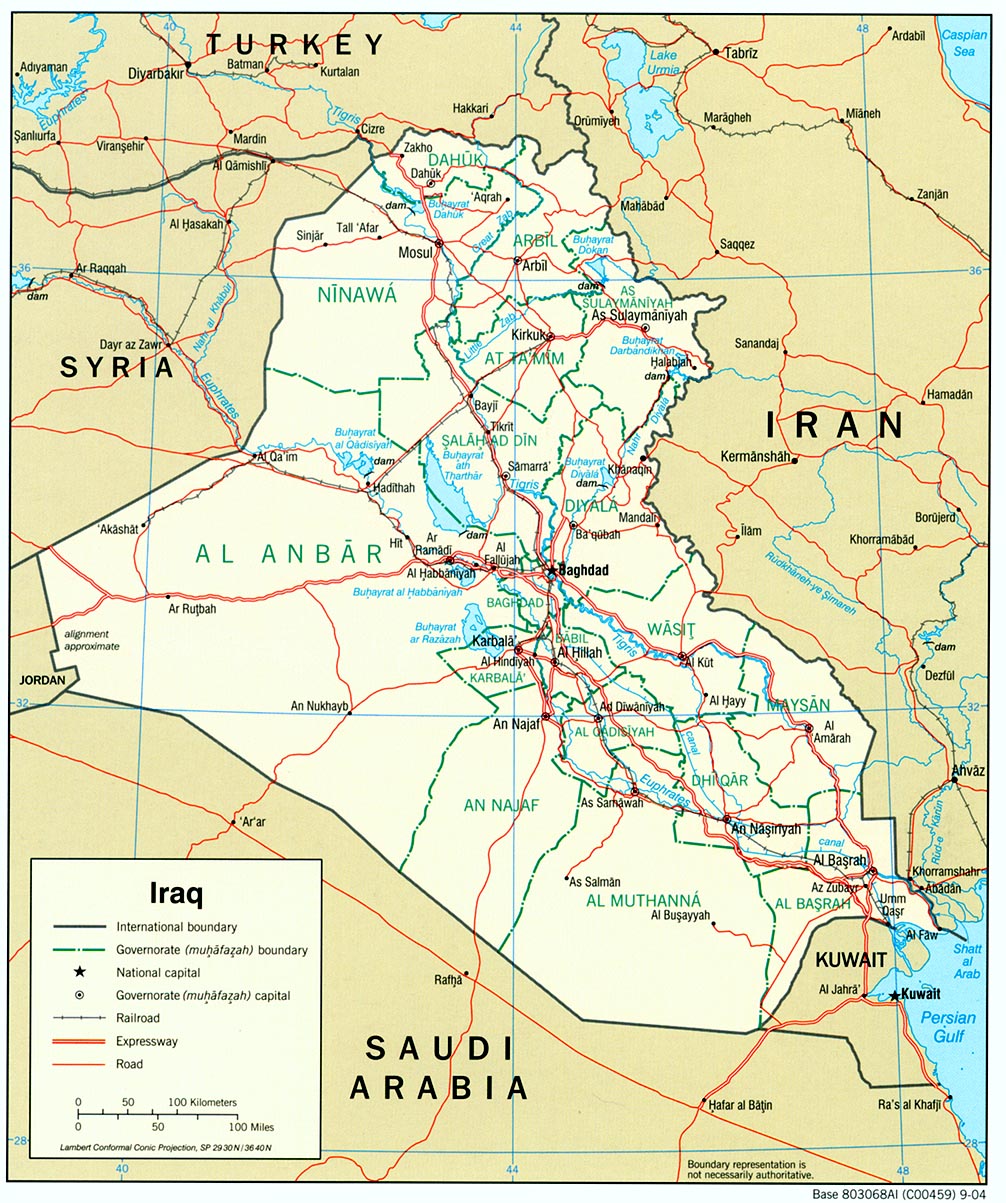
The area to the west of Baghdad includes Fallujah, Ramadi, and other towns that have seen the worst of military occupation, and the strongest resistance.
Despite massive military operations that destroyed most of Fallujah and much of cities like Haditha and al-Qa’im in Ramadi, real control of the area now seems to be in the hands of local resistance.
In losing control of this province, the U.S. would have lost control over much of Iraq.
"We are talking about nearly a third of the area of Iraq," Ahmed Salman, a historian from Fallujah told IPS. "Al-Anbar borders Jordan, Syria, and Saudi Arabia, and the resistance there will never stop as long as there are American soldiers on the ground."
Salman said the U.S. military is working against itself. "Their actions ruin their goal because they use these huge, violent military operations which kill so many civilians, and make it impossible to calm down the people of al-Anbar."
The resistance seems in control of the province now. "No government official can do anything without contacting the resistance first," government official in Ramadi Abu Ghalib told IPS.
"Even the governor used to take their approval for everything. When he stopped doing so, they issued a death sentence against him, and now he cannot move without American protection."
Recent weeks have brought countless attacks on U.S. troops in Haditha, Ramadi, Fallujah, and on the Baghdad-Amman highway. Several armored vehicles have been destroyed, and dozens of U.S. soldiers killed in the al-Anbar province, according to both Iraqi witnesses and the U.S. Department of Defense.
Long stretches of the 340 mi. Baghdad-Amman highway that crosses al-Anbar are now controlled by resistance groups. Other parts are targeted by highway looters.
"If we import any supplies for the U.S. Army or Iraqi government, the fighters will take it from us and sell it in the local market," trader Hayder al-Mussawi said. "And if we import for the local market, the robbers will take it."
Eyewitnesses in Ramadi say many of the attacks are taking place within their city. They say that the U.S. military recently asked citizens in al-Anbar to stop targeting them, and promised to withdraw to their bases in Haditha and Habaniyah (near Fallujah) soon, leaving the cities for Iraqi security forces to patrol.
"I do not think that is possible," retired Iraqi police Brig. Gen. Kahtan al-Dulaimi from Ramadi told IPS. "I believe no local unit could stand the severe resistance of al-Anbar, and it will be the last province to be handed over to Iraqi security forces."
According to the group Iraq Coalition Casualty Count, 964 coalition soldiers have been killed in al-Anbar, more than in any other Iraqi province. Baghdad is second, with 665 coalition deaths.
Residents of Ramadi told IPS that the U.S. military has knocked down several buildings near the government center in the city, the capital of the province.
In an apparent move to secure their offices, U.S. Army and Marine engineers have started to level a one-third-mile stretch of low-rise buildings opposite the center. Abandoned buildings in this area have been used repeatedly to launch attacks on the government complex.
"They are trying to create a separation area between the offices of the puppet government and the buildings the resistance are using to attack them," a Ramadi resident said. "But now the Americans are making us all angry because they are destroying our city."
U.S. troops have acknowledged their own difficulties in doing this. "We’re used to taking down walls, doors, and windows, but eight city blocks is something new to us," Marine 1st Lt. Ben Klay, 24, said in the U.S. Department of Defense newspaper Stars and Stripes.
In nearby Fallujah, residents are reporting daily clashes between Iraqi-U.S. security forces and the resistance.
"The local police force which used to be out of the conflict are now being attacked," said a resident who gave his name as Abu Mohammed. "Hundreds of local policemen have quit the force after seeing that they are considered a legitimate target by fighters."
The U.S. forces seem to have no clear policy in the face of the sustained resistance.
"The U.S. Army seems so confused in handling the security situation in Anbar," said Salman. "Attacks are conducted from al-Qa’im on the Syrian border to Abu Ghraib west of Baghdad, all the way through Haditha, Hit, Ramadi, and Fallujah on a daily basis."
He added: "A contributing factor to the instability of the province is the endless misery of the civilians who live with no services, no infrastructure, random shootings, and so many wrongful detentions."
According to the new Pentagon quarterly report on "Measuring Security and Stability in Iraq," Iraqi casualties rose 51 percent in recent months. The report says Sunni-based insurgency is "potent and viable."
The report says that in a period since the establishment of the new Iraqi government, between May 20 and Aug. 11 this year, the average number of weekly attacks rose to nearly 800, almost double the number of the attacks in early 2004.
Casualties among Iraqi civilians and security forces averaged nearly 120 a day during the period, up from 80 a day reported in the previous quarterly report. Two years ago, they were averaging roughly 30 a day.
On Aug. 31, the Pentagon announced that it is increasing the number of U.S. troops in Iraq to 140,000, which is 13,000 more than the number five weeks ago.
At least 65 U.S. soldiers were killed in August, with 36 of the deaths reported in al-Anbar. That brought the total number killed to at least 2,642.
(Inter Press Service)