Anyone who has spent time in Turkey will find its people civil, generous, educated, and open-minded. Just don’t mention the Kurds. The day after I zigzagged through a sloped, ramshackle enclave to reach the ancient Alexandrian fort of Kadifekale overlooking the port city of Izmir, I received a stern lecture on this sinister group. While waving at little boys greeting me from the escarpment, I had wandered unwittingly into a ferment of terrorism.
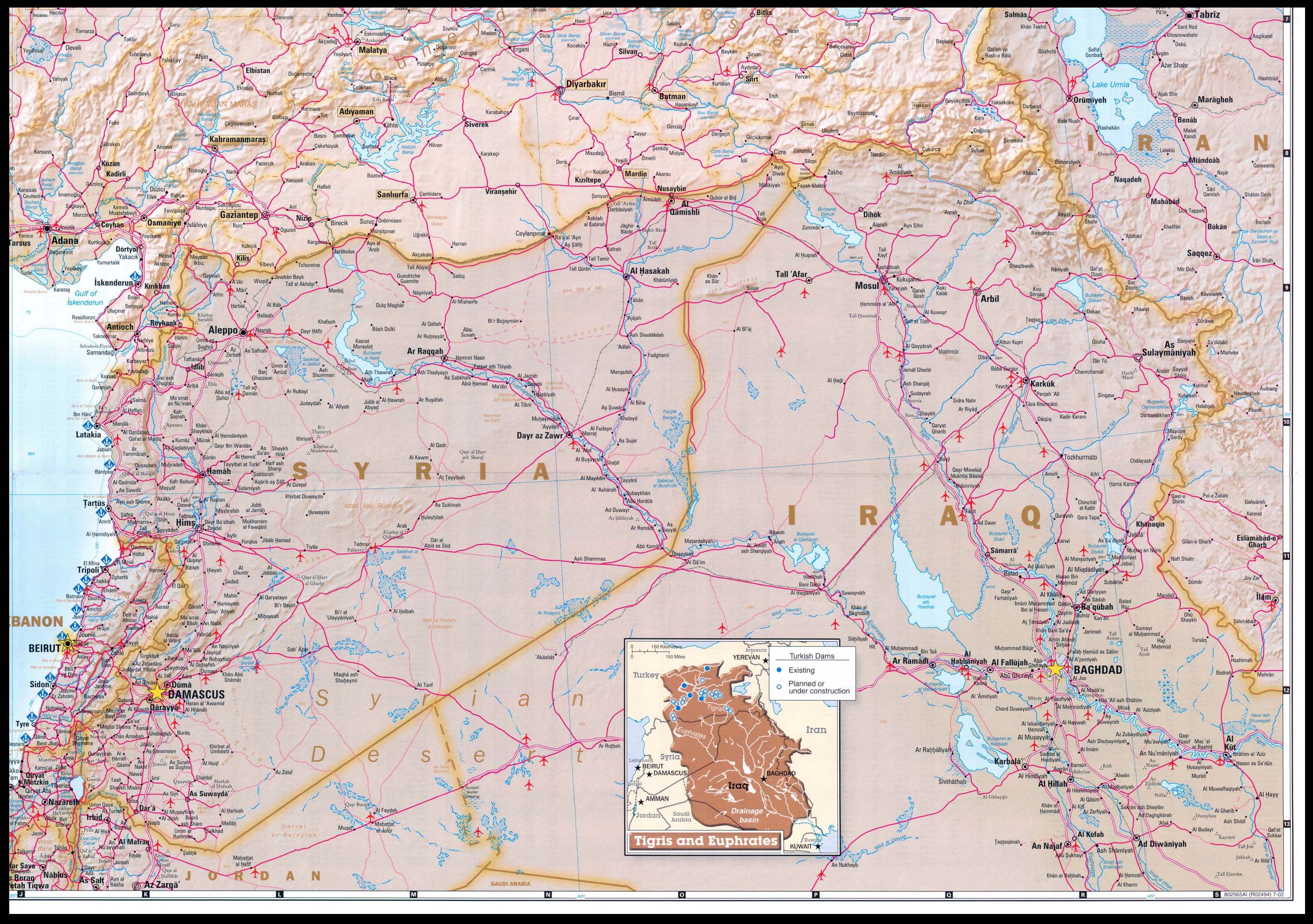
Although the struggle has claimed 30,000 civilian and military deaths mostly in southeastern Turkey over the last 15 years, the Kurds are not just an internal problem. From Turkey’s perspective, they are an Iraqi problem. Kurdish rebels use Iraq as a springboard for their terrorist activities, causing Prime Minister Erdogan to line up 250,000 troops, a number nearly twice as large as the American contingent, along the Iraq border. Last weekend, 14 soldiers were killed by Kurdish guerillas. And now, eyeing the Bush doctrine at work in the Israeli bombing of Lebanon, Erdogan strains at the bit to enter the war.
Blasting Bush’s double standard on the sovereign use of force to combat terrorism, Erdogan has announced troop “contingency plans” to storm over the border. The U.S. has been warning Turkey to restrain itself, but the alliance between the two nations is in shambles. Three years ago, former Defense Deputy Secretary Paul Wolfowitz chided Turkey when its parliament refused to allow the U.S. to use its country as a transit point for the Iraq invasion, and even suggested that the military should have pressured the government into complying with U.S. edicts. Adding double insult to injury, he pledged to root the Kurdish Workers Party (PKK) out of northern Iraq, but instead directed the U.S. to bolster the autonomy of the Kurdish region. Defense Secretary Rumsfeld last year, in one of his more risible statements, blamed the Iraqi insurgency on Turkey.
Denied a homeland in the 1923 carve-up of the Ottoman Empire, Kurds are one of the largest ethnic groups in the world to be stateless. Turkey’s founding father Mustafa Kemal Atatürk prohibited the outward signs of Kurdish culture from his newly formed democratic state, banning Kurdish schools, music, dress, and language. To this date, overt support for Kurdish causes is criminalized. The two factions reached a fragile truce after the capture of Abdullah Ocalan (head of the PKK) in 1999, but over the past two years Kurdish groups have claimed responsibility for bombings in Istanbul, resort towns, and elsewhere. Turkey’s biggest nightmare is a growing separatist movement for an autonomous Kurdish state.
Complicating this matter is Iranian activity against the Kurds. Iran has supposedly shelled some Kurdish enclaves in Iraq making it a complicit partner with Turkey in Kurdish eradication.
The ramifications of Turkey waging war against the PKK in Iraq amid the chaos of so many armed soldiers could certainly lead to confrontation and skirmishes between U.S. and Turkish forces, similar to what happened in Sulaymaniyah in 2003. The Turkish army is no ragtag outfit, having forcibly ousted four governments in the last 45 years. The scenario of pitting two supposed democratic allies, both members of NATO, against each other was already laid out in the Anatolian best-selling book Metal Storm, in which Turkey, allied with its former nemesis Russia, ended up detonating a nuclear suitcase bomb in Washington, D.C.
When Turkish Foreign Minister Abdullah Gul visited Washington earlier this month, he met with Condoleezza Rice in a canned TV appearance to announce a “shared vision document.” The president was too busy to meet with him. Apparently, a country that’s 98 percent Muslim but officially a secular democratic republic since 1923 and shares borders with Iraq, Iran, Syria, Armenia, and Georgia doesn’t merit his attention. And let’s not forget that it hosts oil pipelines that skirt beyond Russian territories and terminate at the Mediterranean – one pumping from the Caspian port of Baku, the other from Kirkuk.
On Saturday, the White House announced Bush had phoned Erdogan and promised more concrete help in some sort of tripartite alliance of U.S., Iraqi, and Turkish forces in dealing with the PKK. How Kurdish civilians get spared in this venture is anybody’s guess. Unfortunately, the Bush administration may be unaware that Turkey views the whole Kurdish population as a terrorist nest.
Thirty thousand dead have seemingly failed to satisfy the blood lust between Turks and Kurds. The Turks proved their ferocity in World War I when they repelled the Allies at Gallipoli, a battle that resulted in 250,000 dead. Armed with the Bush doctrine of taking the fight to the enemy, Turkey, by adding a new staging area to the conflict, could be pouring an inextinguishable accelerant upon the region.