



Since his retirement by Ronald Reagan, President Carter has given active service to the causes of human rights and peace. He has written a number of books, and now he has delivered a humdinger: Our Endangered Values (Simon & Schuster, 2005) in which he takes the Bush administration to task.
 Jimmy Carter is an uncommonly decent and sincere person to have gone so far in American politics. His presidency failed because it coincided in time with three crises: economic malaise resulting from the exhaustion and failure of postwar Keynesian demand management, the outburst of long-simmering hatred in Iran of U.S. interference in Iran’s internal affairs, and a run-up in the oil price (small compared to what Bush and Cheney have achieved).
President Carter finds it unpleasant to write his assessment of the Bush administration, but he steadfastly makes it clear that the Bush/Cheney/neocon “war on terror” is in fact a war on America’s reputation and civil liberties. He points out that the Bush administration has used the “war on terror” to justify actions “similar to those of abusive regimes that we have historically condemned.” Consequently, “the United States now has become one of the foremost targets of respected international organizations concerned about these basic principles of democratic life.”
Carter reports that the deception, naked aggression, and torture that define the Bush administration have caused a tremendous setback for human rights throughout the world. At an international human rights conference in June 2005, “Participants explained that oppressive leaders had been emboldened to persecute and silence outspoken citizens under the guise of fighting terrorism. … The consequence is that many lawyers, professors, doctors,and journalists had been labeled terrorists, often for merely criticizing a particular policy or for carrying out their daily work. We heard about many cases involving human rights attorneys being charged with abetting terrorists simply for defending accused persons.” Carter is especially disturbed that the Bush administration is encouraging these abusive policies in the name of “fighting terrorism.”
Who among us ever expected to hear an American president, vice president, and attorney general justify torture as essential to the protection of the American way of life? Carter quotes Attorney General Alberto Gonzales, who sounds more like a third-world tyrant than an American when he dismisses the Geneva Convention’s provisions as “quaint.” Bush threatened to veto any congressional limitation on his right to torture, and Donald Rumsfeld’s Pentagon declared that “the president, despite domestic and international laws constraining the use of torture, has the authority as commander in chief to approve almost any physical or psychological actions during interrogation, up to and including torture.”
It is not only Carter who is disturbed, but also members of the previous Bush administration, including the current president’s own father and his former national security adviser, Brent Scowcroft. Carter quotes Dr. Burton J. Lee III, President George H.W. Bush’s White House physician, as follows:
“Reports of torture by U.S. forces have been accompanied by evidence that military medical personnel have played a role in this abuse and by new military ethical guidelines that in effect authorize complicity by health professionals in ill-treatment of detainees. … Systematic torture, sanctioned by the government and aided and abetted by our own profession, is not acceptable. … America cannot continue down this road. Torture demonstrates weakness, not strength. … It is not leadership. It is a reaction of government officials overwhelmed by fear who succumb to conduct unworthy of them and of the citizens of the United States.”
Carter notes that the illegal detentions following 9/11 were hurriedly legalized by dubious methods that violate a number of constitutional protections of civil liberties. Carter is distressed that children as young as 8 years old are being held in indefinite detention and tortured. Confronted by Seymour Hersh, a Pentagon spokesman replied that “age is not a determining factor in detention.”
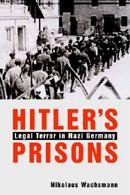 The similarity of Bush administration policies to ” those of abusive regimes that we have historically condemned” is brought home to us by historian Nikolaus Wachsmann’s Hitler’s Prisons (Yale University Press, 2004).
Wachsmann’s book is a detailed history of the conflict and cooperation between the traditional legal/judicial/prison system on the one hand and the police/SS/concentration camp system on the other. He does not mention George Bush or Bush’s “war on terror.” However, the similarities leap off the pages.
Just as 9/11 was a crystallizing event for Bush’s seizure of executive power to suspend civil liberties, detain people indefinitely without evidence, and spy on American citizens without warrants, the Reichstag fire of Feb. 27,1933, was followed the next morning by Hitler’s Decree for the Protection of People and State. This decree became the constitutional charter of the Third Reich. It “suspended guarantees of personal liberty and served as the basis for the police arrest and incarceration of political opponents without trial.”
In a frightening parallel to our own situation, Wachsmann writes: “Various police activities during the ‘seizure of power’ clearly damaged legal authority. Indefinite detention without due judicial process was incompatible with the rule of law. But, on the whole, there were no loud complaints or protests from legal officials.” I read this passage the same day I heard on National Public Radio University of Chicago law professor Eric Posner defend President Bush’s use of extralegal, extra-Constitutional authority to protect the people and state from terrorists.
The precedent for Alberto Gonzales’ declaration that Bush is the law was Reich Minister of Justice Franz Gurtner, who agreed in a cabinet meeting on July 3, 1934, that “Hitler was the law.” Bush’s claim that extraordinary powers are necessary for him to be able to defend our country under extraordinary circumstances is identical to Hitler’s claim that he was entitled to ignore the rule of law because he was “responsible for the fate of the German nation and thereby the supreme judge of the German people.” What is the difference between HItler’s claim and the U.S. Department of Defense’s claim that President Bush has the right to violate domestic and international laws?
Wachsmann’s book shows that it is extremely easy for extraordinary measures in the name of national emergency to become permanent.
Germans did not understand that the Decree for the Protection of People and State was the beginning of legal terror.
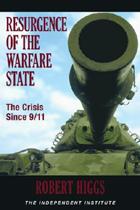 Carter, being a former president, must write with restraint. Wachsmann sticks closely to his subject. But Robert Higgs in his Resurgence of the Warfare State (Independent Institute, 2005) lays it all on the line.
With ruthless logic, Higgs shreds every claim of the Bush administration and its apologists. Reading Higgs leaves no doubt that the Bush administration’s invasion of Iraq was an illegal act based in deception. Under the Nuremberg standard established by the U.S. itself, Bush’s invasion is a war crime. Widespread slaughter of the civilian Iraqi population and the torture of detainees are also war crimes. In one of his best chapters, Higgs destroys the claim that U.S. “smart weapons” are expressions of our morality in warfare because they target only enemy combatants.
Higgs explains that the accuracy within a few yards of smart weapons is meaningless. The blast, heat, and pressures from the weapons destroys everything within 120 yards of the hit. No one within 365 yards can expect to remain unharmed. Injuries can extend to persons 1,000 yards away from the blast. The odds are zero, Higgs writes, that the use of such weapons on towns and cities will not kill and maim large numbers of civilians.
And they have done so. American forces in Iraq have killed far more Iraqi civilians than they have insurgents. It is safe to say that Iraqis never experienced such terror from Saddam Hussein as they have experienced from the American invasion and occupation.
Bush claims that his war crimes are justified because they are committed in the name of “freedom and democracy.” The entire world rejects this excuse. Sooner or later, even Bush’s remaining Republican supporters will turn away in shame from the dishonor Bush has brought to America.
