



Two-and-a-half years ago, I warned Antiwar.com readers that the fix was in at the 9/11 Commission, that the Bush administration had a powerful friend on the inside who would whitewash its pre-9/11 failings. My worst fears have been confirmed by Bob Woodward.
We now learn that a key piece of information further indicting former National Security Adviser Condoleezza Rice for gross negligence was withheld from the “independent” commission’s best-selling report.
On July 10, 2001, the CIA gave the White House its starkest warning on Osama bin Laden and al-Qaeda in the run-up to the attacks. It was issued directly to Rice by then-CIA Director George Tenet, who called an emergency meeting with her at the White House to warn her a big attack was coming. Tenet brought along his top counterterrorism aide.
But Rice gave them both the “brush-off,” according to Woodward in his latest book, State of Denial.
The dramatic meeting never appeared in The 9/11 Commission Report, as if it never happened. The media are calling it a “mystery.”
But who controlled what went into the report? None other than Rice’s close neocon pal Philip Zelikow, executive director of the commission. He steered the investigation, picked witnesses, formulated lines of questioning, subpoenaed documents – and even drafted the final report. 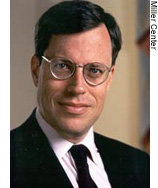
As I detailed in my March 31, 2004, column, Zelikow had a glaring conflict of interest. “There’s a raft of evidence to suggest that Zelikow has personal, professional and political reasons not to see the commission hold Rice and other Bush officials accountable for pre-9/11 failings,” I warned as the commission was wrapping up its hearings.
Zelikow and Rice worked together in the first Bush White House as NSC aides from 1989 to 1991. Not long after their White House stint, they wrote a book on Germany together. Then, following the 2000 election, the pair were reunited in the White House when George W. Bush named Zelikow to his NSC transition team.
Perhaps his friend Rice kept him in the dark about the emergency July 10 meeting. Perhaps it was not an intentional omission on his part.
That’s not what Woodward found. In fact, “Zelikow … knew something about the July 10 meeting,” he writes.
What’s more, Rice’s insider pal also buried no less than five pre-9/11 memos from her NSC aides seeking retaliation against bin Laden for the USS Cole bombing. Her aides said they had the evidence to go after bin Laden months before the 9/11 attacks. But Rice did nothing.
On March 2, 2001, then-senior White House counterterrorism official Roger Cressey sent a memo to Rice relaying intelligence that bin Laden had gloated about the attack on the Cole in a poem he read at his son’s wedding. “BIN LADEN on the USS COLE” was the title of the urgent memo.
But Rice couldn’t be bothered with stuff that happened on Clinton’s watch.
Undeterred, Cressey a few weeks later followed up with Rice’s deputy Steve Hadley. He wrote, “We know all we need to about who did the attack to make a policy decision.” His March 22 e-mail – written under the heading, “Need for Terrorism DC Next Week” – fell on deaf ears.
Two days later, White House terror czar Richard Clarke weighed in on the subject. He wrote both Rice and Hadley that the Yemeni prime minister had told the State Department that while Yemen was not saying so publicly, Yemen was 99 percent certain that bin Laden was responsible for the Cole attack. His March 24 memo, “Yemen’s View on the USS Cole,” only elicited more yawns from Bush’s top security aides.
By the summer, Clarke finally had the ironclad proof he needed to convince Rice and the president to take action against bin Laden. On June 21 – less than three months before the 9/11 attacks – Clarke fired off another memo to Rice and Hadley alerting them that a new al-Qaeda video claimed responsibility for the Cole. His memo couldn’t have been more plain: “Al Qida [sic] Video Claims Responsibility for Cole Attack.”
More yawns from Rice.
Later that month, two Saudi jihadists arrested by Bahraini authorities during the summer threat spike told their captors that their al-Qaeda training camps in Afghanistan had held celebratory parties over the Cole attack.
By now, Clarke’s hair was on fire. He dashed off another memo to Rice on June 29. Rice again did nothing – except cut Clarke out of Cabinet meetings in a virtual demotion, that is.
Why were these damning memos buried in tiny agate type deep in the footnotes of the 9/11 report? Because Condi’s loyal pal and former White House colleague wrote the report. He picked what we’d see in the narrative and what we’d have to hunt for in the footnotes – all the way back on page 509.
The information that Zelikow omitted and buried would have otherwise indicted his friend as one of the most incompetent national security advisers to ever serve in the White House. Rice not only missed the gravest threat to U.S. national security, but arrogantly brushed off warnings about it and failed to take action that could have disrupted the plot. Her negligence should have come through loud and clear in the 9/11 report, but it didn’t. The American people were deceived.
If Rice had a powerful friend inside the 9/11 Commission, do you think she could count on him painting her in the best possible light? What if she promised him a high-level job in the administration after his stint with the commission was completed?
Zelikow now works as a senior policy adviser to Rice at the State Department.
